Gemba -The Work Place

Blog Post

Gemba -The Work Place > Resources

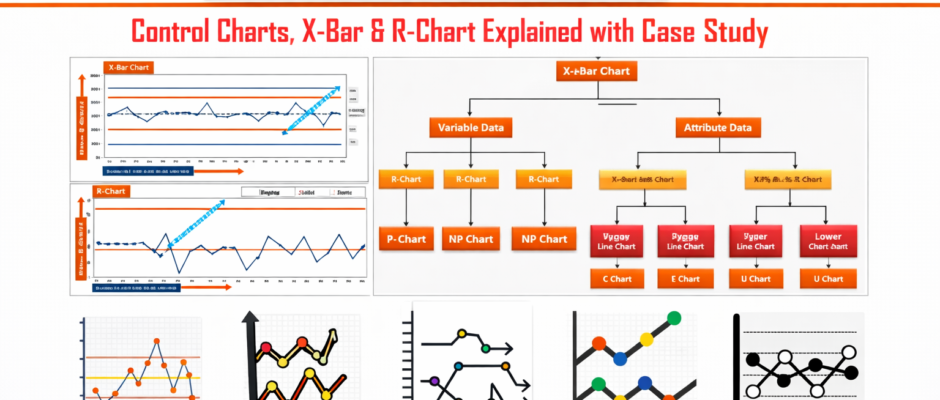
What is a Control Chart?

Monitors Process Behavior Over TimeIt helps track process data in sequence to understand trends and stability. Distinguishes Between Normal and Abnormal VariationIt identifies the difference between common cause variation (natural process variation) and special cause variation (due to specific problems). Helps Maintain Process ControlIt allows teams to detect process instability early and take corrective actions. […]

Read More

Failure Mode and Effects Analysis (FMEA): A Complete Guide to Prevent Failures Before They Occur

Introduction In today’s competitive manufacturing environment, preventing problems is far more effective than correcting them later. Failure Mode and Effects Analysis (FMEA) is a structured risk assessment tool used to identify potential failures in product design or manufacturing processes and implement preventive actions before issues reach the customer. FMEA is widely used in automotive, aerospace, […]

Read More

What is Industry 4.0?

Quality 4.0 refers to the integration of digital technologies with traditional quality management principles to improve efficiency, compliance, and customer satisfaction. 62. Quality 4.0 Presentation It combines: The focus is not only technology—but also culture, leadership, and smarter decision-making. Why Industry 4.0 is Important Today Modern manufacturing faces several challenges: Quality 4.0 solves these problems […]

Read More

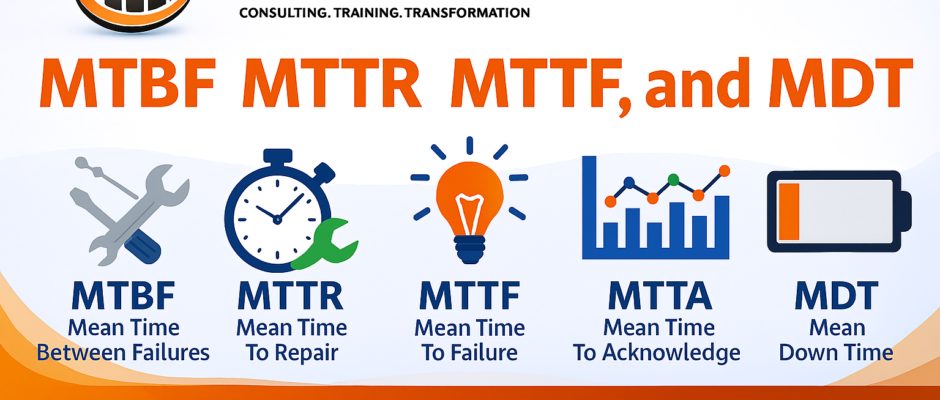
Mastering MTBF, MTTR, MTTF, MTTA & MDT: The Complete Guide for Reliability & Maintenance Excellence

In every manufacturing or industrial environment, equipment reliability is the backbone of productivity. When machines fail, everything stops—output, delivery commitments, customer satisfaction, and profitability.This is why world‑class organizations rely on a set of powerful reliability metrics: MTBF, MTTR, MTTF, MTTA, and MDT. These metrics don’t just measure performance—they reveal hidden losses, expose systemic issues, and […]

Read More

The 14 Bosch Q-Basics Principles

1. Stop Sign – Visualize and Communicate Problems Immediately When a defect or customer complaint occurs, it must be clearly displayed at the workstation where the issue originated. This ensures all employees are aware of the problem and corrective actions. Purpose Visual communication accelerates resolution. 2. Andon Cord – Stop the Process When Abnormality Occurs […]

Read More

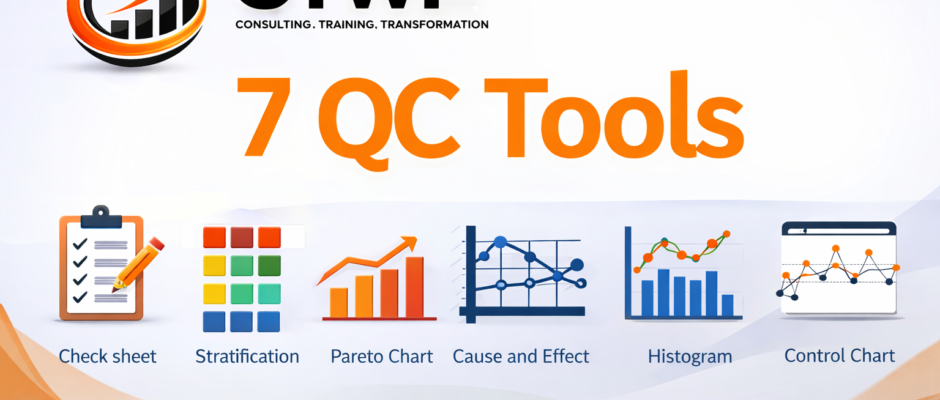
7 Basic Tools of Quality: The Foundation of Effective Problem Solving in Manufacturing

In any manufacturing or service organization, quality problems cannot be solved effectively without data-based analysis. The 7 Basic Tools of Quality provide a simple and structured approach to collect data, analyze problems, identify root causes, and control processes. These tools are powerful yet easy to use. Studies show that up to 90% of workplace quality […]

Read More

8D Problem Solving: A Structured Approach to Eliminate Defects and Prevent Recurrence

4 In manufacturing and automotive industries, customer complaints, internal defects, and audit non-conformities require a systematic corrective action approach. Temporary fixes may resolve the immediate issue, but without identifying the true root cause, the problem will return. The 8D (Eight Disciplines) Problem Solving method is a globally recognized structured approach used to identify root causes, […]

Read More

KAIZEN: Building a Culture of Continuous Improvement in Manufacturing and Business

Kaizen for Continuous Improvement – A Practical Guide,Introduction: Why Continuous Improvement Is No Longer Optional Kaizen is a core principle of Lean Manufacturing and continuous improvement. The word “Kaizen” comes from Japanese and means “change for better.” It focuses on making small, incremental improvements every day rather than relying on large, disruptive changes. What Is […]

Read More

What is a Sanctioned Interpretation in IATF 16949 and How It Affects Your Audit

4 Introduction IATF 16949 is the global Quality Management System (QMS) standard for the automotive industry. However, many organizations struggle during audits—not because they ignore the standard, but because they misunderstand how certain requirements should be implemented. To clarify requirements, the International Automotive Task Force (IATF) periodically issues Sanctioned Interpretations (SIs). These interpretations directly influence […]

Read More

Statistical Process Control (SPC):-

A Complete Guide from Definition to Implementation A Practical, Gemba‑Focused Approach for Manufacturing & Quality Professionals Statistical Process Control (SPC) is one of the most powerful tools in modern manufacturing. It transforms raw process data into actionable insights, enabling organizations to detect variation, prevent defects, and build predictable, stable processes. This guide walks you through […]

Read More
  • 1
  • 2