
Kaizen for Continuous Improvement – A Practical Guide,Introduction: Why Continuous Improvement Is No Longer Optional
Kaizen is a core principle of Lean Manufacturing and continuous improvement. The word “Kaizen” comes from Japanese and means “change for better.” It focuses on making small, incremental improvements every day rather than relying on large, disruptive changes.
What Is Kaizen?
Kaizen is a philosophy and a method. It encourages employees at all levels to identify problems, suggest improvements, and participate in implementing solutions. Kaizen builds a culture where improvement becomes a daily habit.
Key Principles of Kaizen
1. Continuous Improvement
Small improvements made consistently lead to major long-term gains.
2. Employee Involvement
Everyone—from operators to managers—participates in identifying and solving problems.
3. Standardization
Once an improvement is successful, it must be standardized to sustain the gains.
4. Waste Elimination
Kaizen focuses on removing the seven wastes: defects, overproduction, waiting, non-value-added motion, transportation, inventory, and overprocessing.
5. Gemba Focus
Improvements must be based on real observations at the workplace (Gemba).
Types of Kaizen Activities
– Daily Kaizen: Small improvements done by individuals or teams.
– Kaizen Events: Short, focused workshops (1–5 days) to solve specific problems.
– Cross-Functional Kaizen: Teams from different departments collaborate to improve processes.

Kaizen, a Japanese term meaning change for better, represents a structured approach where everyone—from operators to top management—contributes to improving processes, quality, safety, delivery, and cost. It is not a one-time project but a long-term culture embedded in daily operations.

In today’s competitive manufacturing environment, companies cannot rely only on inspection and documentation to ensure quality. Sustainable success comes from continuous improvement at the workplace (Gemba).
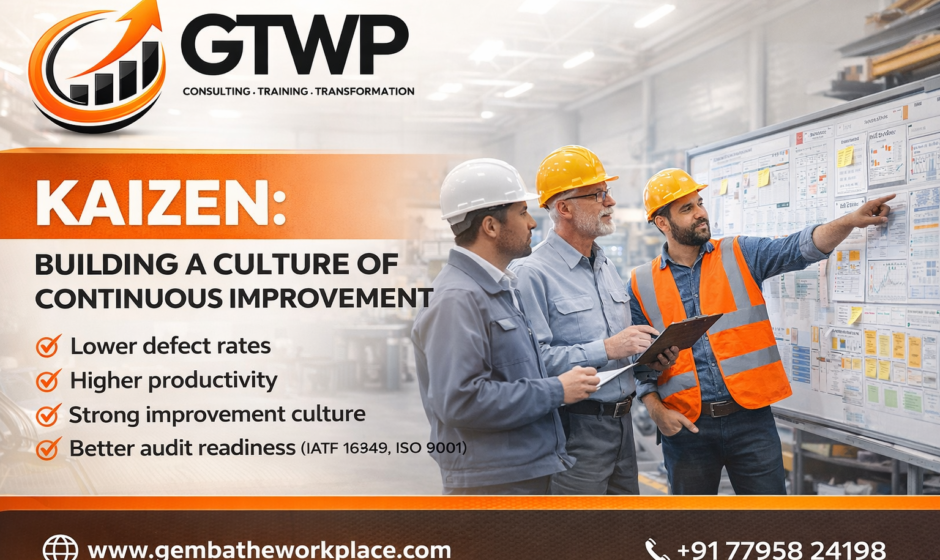
Organizations practicing Kaizen consistently achieve:
- Lower defect rates
- Higher productivity
- Improved employee engagement
- Better audit readiness (IATF 16949, ISO 9001)
- Reduced operational waste
What is Kaizen?

4
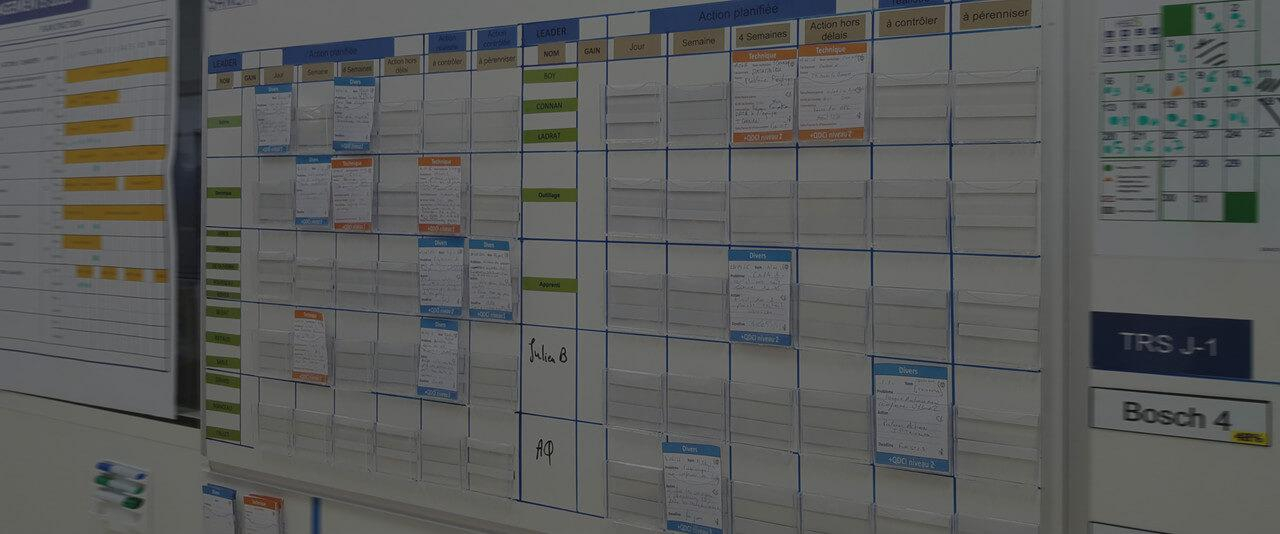
Kaizen means continuous improvement involving everyone. It focuses on making small, practical changes that deliver measurable results over time. 26. Kaizen Complete Presentation
Key characteristics:
- Improvement driven by shop-floor employees
- Focus on eliminating waste and inefficiencies
- Standardizing best practices
- Using structured methods like PDCA (Plan-Do-Check-Act)
Kaizen is not just a tool—it is a mindset and management system.
The 3 Core Pillars of Kaizen

4
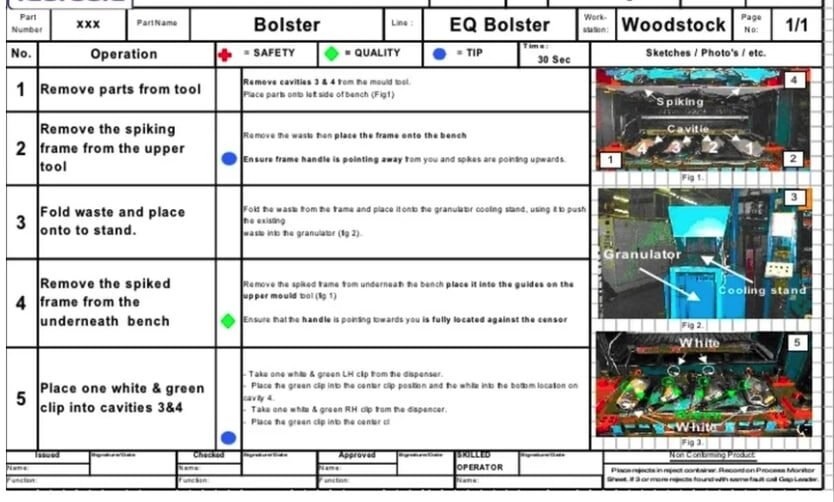
STANDARD OPERATING PROCEDURE
1. Workplace Organization (5S)
A clean and organized workplace improves safety, efficiency, and morale.
5S elements:
- Sort
- Set in order
- Shine
- Standardize
- Sustain
2. Waste Elimination (Muda)
Waste includes activities that do not add value, such as:
- Waiting
- Transportation
- Excess inventory
- Unnecessary motion
- Extra Processing
- Defects
- Non Utilized talent
3. Standardization
Standard work ensures consistency and creates a baseline for future improvement.
Without standards, improvement cannot be sustained.
Practical Kaizen Examples from the Shop Floor


Examples include:
- Marking inspection points for easy monitoring
- Organizing tools using shadow boards
- Labeling flow direction and operating limits
- Rearranging tools to reduce operator motion
These simple changes improve productivity and reduce errors.
Benefits of Implementing Kaizen
Organizations implementing Kaizen achieve measurable business benefits:
Operational Benefits
- Reduced defects and rework
- Improved process efficiency
- Reduced downtime
- Higher productivity
- Reduced waste and costs
- Improved quality
- Stronger teamwork and morale – Faster problem-solving
Financial Benefits
- Lower operational costs
- Reduced waste and inventory
People Benefits
- Increased employee engagement
- Strong improvement culture
- Better teamwork
Audit & Compliance Benefits
- Improved compliance with IATF 16949, ISO 9001
- Stronger process control
- Easier audit readiness
Common Mistakes in Kaizen Implementation
– Treating Kaizen as a one-time event
– Lack of leadership support
– No follow-up on improvements
– Ignoring employee suggestions
Conclusion Kaizen is a powerful approach that transforms workplace culture. When practiced consistently, it leads to continuous improvement, higher efficiency, and long-term operational excellence.Why Many Organizations Fail in Continuous Improvement
Common challenges include:
- Improvement limited to documentation, not the shop floor
- Lack of leadership involvement
- No structured training
- No system to sustain improvements
Kaizen succeeds only when it becomes part of daily management and leadership behavior.
How Gemba The Workplace Supports Your Organization

Gemba The Workplace – Consulting · Training · Transformation
We help manufacturing and service organizations build a practical improvement culture, not just documentation.
Our Services
Consulting
- Kaizen implementation programs
- Lean manufacturing deployment
- IATF 16949 and ISO 9001 implementation
- Shop-floor productivity improvement
Training
- Kaizen and Lean training
- Internal auditor training
- Core tools training (APQP, PPAP, FMEA, SPC, MSA)
- Supervisory and leadership development
Transformation
- Plant performance improvement
- Waste reduction projects
- Visual management systems
- Sustainable continuous improvement culture
Start Your Kaizen Journey Today
Continuous improvement is not a destination—it is a daily habit. Organizations that adopt Kaizen create stronger teams, better quality, and sustainable growth.
Contact Gemba The Workplace
Website: https://gembatheworkplace.com
Email: support@gembatheworkplace.com
Phone: +91 77958 24198